
Buying Off-Plan Property in Spain: Payment Schedules, Bank Guarantees & Buyer Protection
Buying an off-plan property in Spain can offer advantages that are difficult to find in the resale market: modern specifications, energy-efficient construction, larger terraces, contemporary communal facilities and, in many cases, the ability to choose between different layouts, orientations and floors before a development is completed. Updated for buyers planning a property purchase in Spain in 2027.
It is also a different purchase process from buying an existing home.
Instead of paying the purchase price at completion, buyers normally reserve a property and make a series of payments while construction progresses. This means understanding the developer, the purchase contract, payment schedule, bank guarantees, taxes and expected completion process is particularly important before committing.
For international buyers looking at new developments on the Costa del Sol, this guide explains how an off-plan purchase in Spain normally works, what protections buyers should expect and what should be checked before transferring funds.
What Does Buying Off-Plan Property in Spain Mean?
An off-plan purchase generally means buying a property before construction has been completed. Depending on the development, you may be purchasing during pre-launch, shortly after construction begins, or when the building is already well advanced but has not yet been legally completed and delivered.
The buyer usually selects a specific unit from plans, floor plans, specifications, renders and developer documentation rather than inspecting a finished property.
Some developments also have show homes or completed previous phases that allow buyers to better understand the finishes and construction quality.
The exact purchasing structure varies between developers, but most transactions involve several stages:
- Choosing a specific property
- Signing a reservation agreement
- Paying a reservation deposit
- Legal due diligence
- Signing the private purchase contract
- Making agreed stage payments during construction
- Inspecting the completed property
- Signing the public title deed before a notary
- Paying the remaining purchase price and taking possession
Step 1: Choosing the Right Development and the Right Unit
Choosing the development is only the first decision.
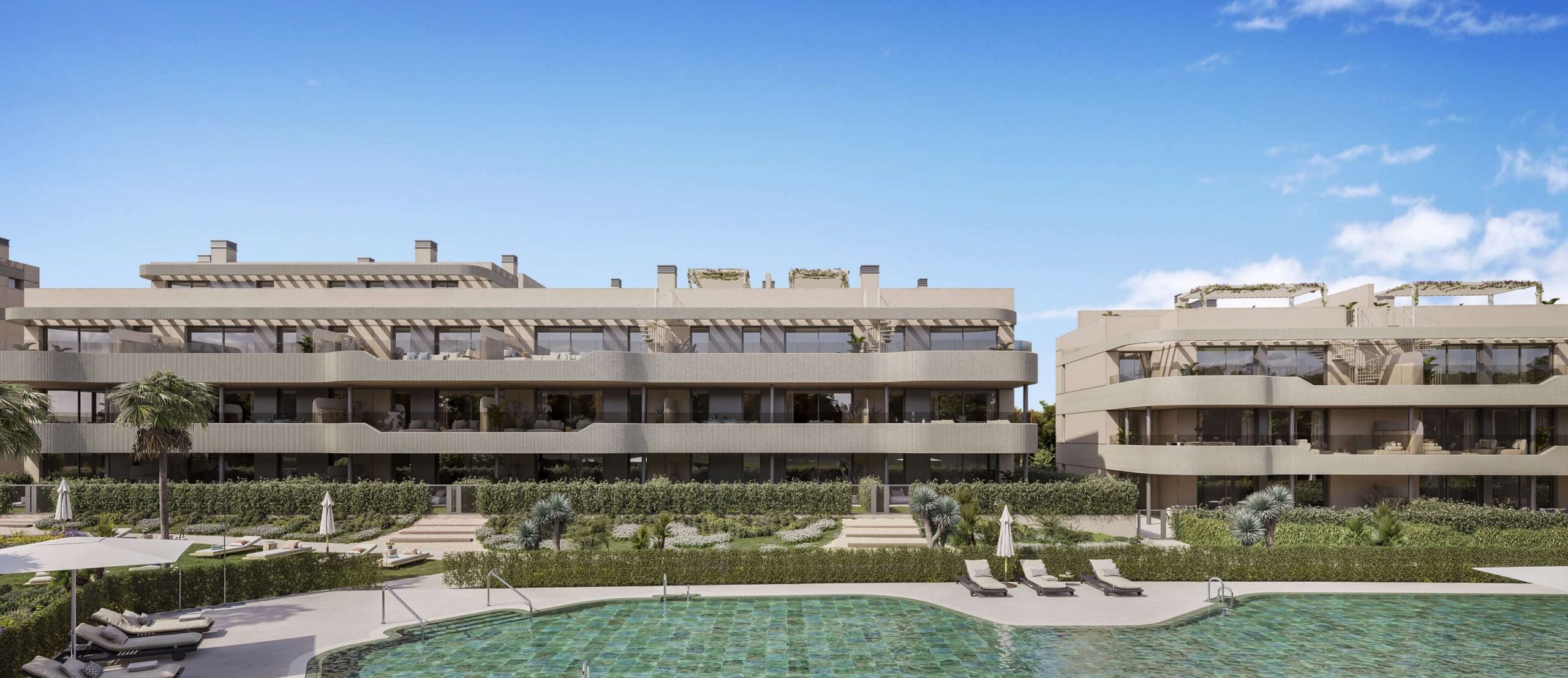
Within the same development, two apartments with an identical number of bedrooms can have significantly different long-term value because of their position.
Factors worth comparing include:
- Orientation
- Floor level
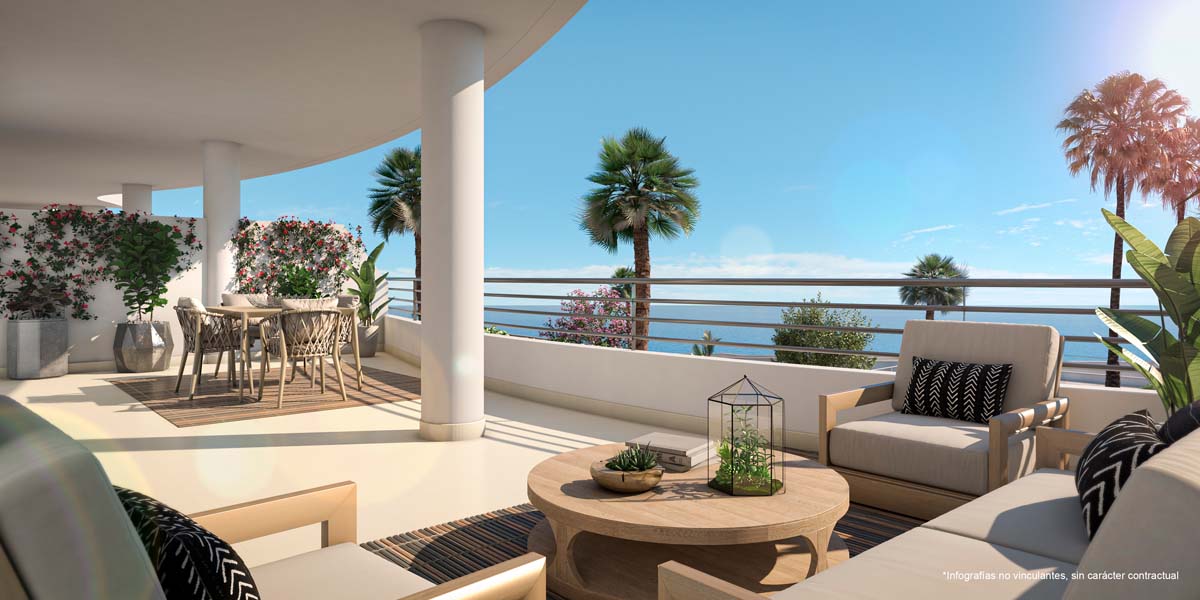
- Sea, golf or mountain views
- Distance from neighbouring buildings
- Privacy
- Terrace size and usable outdoor space
- Morning or afternoon sun
- Proximity to swimming pools and communal facilities
- Road or traffic exposure
- Parking location
- Storage room location
- Accessibility within the development
This is particularly important in large developments where pricing can vary substantially between buildings, orientations and phases.
A cheaper unit is not automatically better value. In many developments, paying moderately more for the right orientation, view or terrace can materially improve both the experience of owning the property and its future resale appeal.
Step 2: The Reservation Agreement
Once a buyer selects a property, the developer will normally ask for a reservation payment to remove that specific unit from the market for an agreed period.
The amount varies by project. More important than the amount itself is understanding exactly what the reservation agreement says before transferring the money.
The document should clearly identify:
- The development
- The specific property being reserved
- Parking and storage where applicable
- The agreed purchase price
- The reservation amount
- The period for which the property will be reserved
- The deadline for signing the private purchase contract
- The circumstances in which the reservation payment is refundable or non-refundable
Buyers should never assume that a reservation payment can automatically be recovered simply because they later change their mind.
For that reason, we normally recommend having the reservation documentation and the basic legal position of the development reviewed before making a substantial commitment, particularly where the reservation agreement contains strict cancellation provisions.
Step 3: Independent Legal Due Diligence
Off-plan buyers should use an independent Spanish lawyer representing the buyer rather than relying exclusively on documentation supplied by the developer or sales office.
The legal review will depend on the project, but normally includes verification of areas such as:
- Ownership of the development land
- Charges, mortgages or encumbrances affecting the land
- The legal identity of the developer
- Planning status
- Building licence
- The approved project
- The contractual specification of the property
- Payment schedule
- Protection of advance payments
- Expected completion and delivery provisions
- Parking and storage rights
- Community structure where applicable
The purpose is not simply to establish that the development exists. It is to confirm that the property the buyer believes they are purchasing corresponds with the legal and contractual documentation.
Step 4: The Private Purchase Contract
After the reservation stage and legal review, the buyer normally signs a private purchase contract, commonly referred to in Spain as the contrato privado de compraventa.
This is one of the most important documents in the entire transaction.
It should clearly establish the property being purchased, total price, taxes, payment schedule, specifications, expected delivery period and the obligations of both buyer and developer.
Before signing, buyers should understand provisions relating to:
- Construction and delivery deadlines
- Permitted extensions
- Consequences of delays
- Changes to plans or specifications
- Buyer default
- Developer default
- Assignment or resale before completion, if permitted
- Bank guarantees or insurance protecting advance payments
The private contract can create substantial financial obligations long before the property is completed, so it should be reviewed carefully rather than treated as a standard administrative document.
How Do Off-Plan Payment Schedules Work?
There is no single payment schedule used by every Spanish developer.
A typical structure may involve:
- A reservation payment
- A larger payment when the private purchase contract is signed
- One or more instalments during construction
- The remaining balance when the property is completed and the title deed is signed
Some developments require relatively little capital during construction, while others may require a significant percentage of the purchase price before completion.
This makes the payment schedule an important part of comparing two developments.
For example, two properties may have similar purchase prices but require very different amounts of capital over the following 12, 18 or 24 months.
International buyers should therefore evaluate not only the headline purchase price but also when each payment becomes due.
Bank Guarantees and Protection of Advance Payments
Spanish law provides specific protection for money paid in advance towards residential property under construction.
Once the relevant building licence has been obtained, developers receiving advance payments are required to protect qualifying amounts through an authorised guarantee mechanism, such as a bank guarantee or insurance policy, and advance payments must be handled through a special account separated from the developer’s other funds.
The protection is intended to cover the amounts advanced by the buyer, applicable taxes and legal interest if the development does not begin or the property is not delivered in accordance with the circumstances covered by the law.
The purchase documentation should identify the relevant guarantee arrangements and the financial institution or insurer involved.
Buyers should retain copies of:
- Payment receipts
- Bank transfer confirmations
- The private purchase contract
- Individual guarantee or insurance documentation
- Correspondence relating to payment schedules and delivery
Do not assume that simply paying money to a well-known developer removes the need to verify the protection applying to the payment.
What Happens if an Off-Plan Development Is Delayed?
Construction delays can occur for many reasons, and not every delay automatically gives the buyer the right to cancel the contract.
The first document to examine is the purchase contract itself, including the agreed completion date, delivery period and any valid extension provisions.
Spanish legislation also provides protections where construction fails to begin or the property is not delivered under the conditions covered by the statutory guarantee regime.
Depending on the circumstances, a buyer may be able to seek termination of the contract and return of protected advance payments, including applicable taxes and legal interest, or agree to an extension of the delivery period.
These situations are fact-specific and should be handled by the buyer’s lawyer rather than through informal negotiations alone.
Taxes When Buying a New-Build Property in Spain
A new residential property purchased directly from the developer is generally subject to VAT rather than the transfer tax normally associated with resale property.
VAT – IVA
For a standard new residential property in mainland Spain and the Balearic Islands, the general VAT rate applicable to the first delivery of a new home is currently 10%.
VAT also becomes relevant to advance payments: where taxable advance payments are made before completion, VAT is generally due as those amounts are received rather than being postponed entirely until the final completion date.
This means buyers should calculate their construction-stage cash requirements using the payment amounts plus the applicable VAT, rather than looking only at the net purchase-price instalments.
Stamp Duty – AJD
The purchase of a new home documented in a public deed is also normally subject to Actos Jurídicos Documentados or AJD.
AJD is a regional tax, so the rate depends on the autonomous community in which the property is located.
For properties on the Costa del Sol in Andalucía, the current general AJD rate is 1.2%, although reduced rates can apply in specific circumstances.
Tax rules can change and individual circumstances matter, so buyers should confirm the current calculation with their lawyer or tax adviser before completing a purchase.
What Other Buying Costs Should Be Budgeted?
In addition to VAT and AJD, a buyer should normally budget for other transactional costs such as:
- Independent legal fees
- Notary and registration expenses
- Mortgage-related valuation costs where financing is required
- Banking or financing costs where applicable
- Furniture and interior packages if the property is delivered unfurnished
The exact total varies according to property price, financing structure and the region in which the purchase takes place.
Before reserving, we recommend preparing a complete acquisition budget rather than calculating affordability from the advertised property price alone.
Can You Get a Mortgage on an Off-Plan Property in Spain?
Yes. International buyers can finance new-build properties in Spain, subject to the bank’s lending criteria.
However, the timing is different from purchasing a completed resale property.
A buyer may reserve an off-plan property months or even years before completion, whereas the final mortgage normally relates to the property once it is approaching legal completion and can be valued appropriately.
For this reason, buyers planning to use financing should obtain an early assessment of their borrowing capacity before committing to a substantial construction-stage payment schedule.
This is particularly important for non-resident buyers because the amount a Spanish bank is willing to lend may be lower than for Spanish tax residents, and lending decisions also depend on income, existing debt, age, currency of earnings and the individual bank’s risk policy.
Alta Moderna works directly with major Spanish banks and can help international buyers obtain an initial mortgage assessment before choosing a development.
Do Not Rely on a Future Mortgage to Fund Construction Payments
This is an important distinction.
If a development requires substantial payments during construction, buyers should generally have the resources to meet those contractual instalments independently of the mortgage expected at completion.
A future mortgage approval should not be treated as guaranteed several years in advance.
Interest rates, property valuations, employment circumstances, income and bank lending criteria can change before completion.
A well-structured purchase should therefore consider both:
- The capital required during construction
- The expected financing required at completion
What Happens Before Completion?
As construction approaches completion, several processes normally take place.
The developer completes the building, obtains the relevant technical and municipal documentation and prepares individual properties for delivery.
The exact administrative procedure varies by location, but the documentation allowing lawful occupation of the property must be in place in the form applicable to the municipality and development.
If a mortgage is being used, this is also when the final financing process normally becomes much more active.
The bank will generally require documentation relating to both the buyer and the completed property, and a formal valuation may be required.
The Snagging Inspection
Before or around delivery, buyers should inspect the completed property carefully.
This is commonly known as a snagging inspection.
The purpose is to identify defects or items requiring correction, which may include:
- Paint or plaster imperfections
- Damaged tiles or flooring
- Doors or windows requiring adjustment
- Kitchen or bathroom defects
- Electrical fittings
- Air-conditioning systems
- Water pressure and plumbing
- Terraces and drainage
- Differences between agreed specifications and delivered finishes
For international buyers who cannot attend personally, an independent professional can usually inspect the property and prepare a snagging report on their behalf.
Completion at the Notary
The final acquisition normally takes place through the signing of the public title deed, or escritura pública de compraventa, before a Spanish notary.
At this stage, the remaining purchase price is settled, any mortgage is formalised where applicable and ownership is transferred to the buyer.
The title deed is subsequently submitted to the Property Registry so that the buyer’s ownership can be registered.
If the buyer cannot attend Spain personally, completion can often be handled by an authorised representative under a suitable Spanish power of attorney.
Should You Buy During Pre-Launch or Wait Until Construction Is Advanced?
There is no universally correct answer.
Buying early can provide:
- A wider choice of units
- Better selection of floors and orientations
- Access to early-stage pricing in some developments
- More time to prepare financially before completion
Waiting until construction is more advanced can provide:
- Greater visibility of the finished building
- A shorter period between purchase and delivery
- More certainty over construction progress
- Potential access to completed or nearly completed show units
The trade-off is that the strongest units may already have been reserved by the time construction is advanced.
In high-demand developments, penthouses, corner apartments, larger terraces and properties with the best views are often among the first units selected.
Is Buying Off-Plan Property in Spain Safe?
Buying off-plan in Spain can be a well-structured and legally protected process, but the quality of the transaction depends on proper due diligence.
The safest approach is not simply to ask whether the developer is reputable. Buyers should verify the development itself, the documentation applying to their specific unit, the payment protections and the contractual obligations they are accepting.
Important safeguards include:
- Independent legal representation
- Verification of planning and building documentation
- Review of the private purchase contract
- Confirmation of applicable guarantees for advance payments
- Making payments only to properly identified accounts
- Keeping complete records of every payment
- Understanding the agreed delivery provisions
Common Mistakes International Buyers Should Avoid
Choosing Only by Price
A cheaper apartment with a poor orientation or compromised view may not offer better value than a slightly more expensive unit in a superior position.
Ignoring the Payment Schedule
The purchase price alone does not show how much cash will be required during construction.
Assuming Every Deposit Is Automatically Refundable
The reservation agreement should be understood before funds are transferred.
Waiting Until Completion to Think About a Mortgage
Buyers using finance should establish realistic borrowing capacity early.
Not Comparing Developments
A beautiful render does not tell you whether another development nearby offers a better location, specification, payment structure or individual unit for the same budget.
Focusing Only on the Interior
Orientation, terrace, view, building position and surrounding future development can matter just as much as kitchens and bathrooms.
Using the Developer’s Sales Information as the Only Due Diligence
Sales material explains the product. Independent legal due diligence verifies the transaction.
How Alta Moderna Approaches New Developments
Alta Moderna works as a buyer-side property advisory for international clients purchasing in Spain.
Rather than representing only one development, we can compare projects and individual units across our wider network.
Our role can include:
- Shortlisting suitable developments
- Comparing individual units and orientations
- Checking current developer availability
- Reviewing payment schedules
- Arranging development visits
- Coordinating independent legal due diligence
- NIE and Spanish banking assistance
- Mortgage introductions with leading Spanish banks
- Notary and completion coordination
- Snagging and handover support
- Furnishing and property management after completion
Our current portfolio includes developments at different construction stages and price points, from established projects such as Lomas del Higuerón to boutique coastal projects such as Absolute Estepona and new opportunities including Serenity Alcaidesa.
You can browse our current selection of new developments on the Costa del Sol, or read our wider guide to buying property in Spain as a foreign buyer.
Frequently Asked Questions About Buying Off-Plan Property in Spain
What is an off-plan property?
An off-plan property is purchased before construction has been fully completed. Depending on the project, the buyer may reserve during pre-launch, during construction or shortly before completion.
Do I pay the full purchase price when I reserve?
No. Off-plan purchases normally use a staged payment schedule. A reservation payment is followed by further contractual payments, with the remaining balance typically due at completion. The exact percentages and dates vary by development.
Are off-plan payments protected in Spain?
Spanish legislation provides specific protection for qualifying advance payments made towards residential property under construction. Once the applicable legal requirements are met, advance payments are generally protected through a bank guarantee or authorised insurance mechanism. Your lawyer should verify the protection applying to your specific payments and contract.
What tax do I pay on a new-build property?
New residential properties purchased directly from a developer are generally subject to 10% VAT in mainland Spain and the Balearic Islands, plus the applicable regional AJD stamp duty. In Andalucía, the current general AJD rate is 1.2%, subject to any applicable reduced rates or future legislative changes.
Do I pay VAT on construction-stage payments?
Generally yes. VAT becomes due on taxable advance payments when the developer receives them, so buyers should budget for the applicable VAT alongside the agreed construction instalments.
Can foreigners buy off-plan property in Spain?
Yes. International and non-resident buyers can purchase off-plan property in Spain. They will normally require an NIE number and should establish the appropriate Spanish banking and legal arrangements for the purchase.
Can a non-resident get a mortgage for an off-plan property?
Yes, subject to the lender’s approval. However, the final mortgage process normally takes place closer to completion, so buyers should obtain an early assessment of borrowing capacity and should not assume that future financing is guaranteed.
What happens if the development is delayed?
The answer depends on the purchase contract and the circumstances of the delay. Spanish law also provides protections in certain cases where construction does not begin or the property is not delivered under the agreed conditions. Buyers facing a material delay should have their lawyer review their contractual and statutory rights.
Can I sell an off-plan property before completion?
Sometimes, but not automatically. Assignment rights depend on the purchase contract and developer policy, and there may be legal, tax or administrative implications. If the ability to resell before completion matters to you, this should be checked before signing the private purchase contract.
Should I use a lawyer when buying off-plan in Spain?
Independent legal representation is strongly recommended. An off-plan transaction involves contractual obligations and payments before the property is completed, making independent review particularly important.
When should I start looking for a mortgage?
It is useful to obtain an initial financial assessment before reserving so you understand your likely borrowing capacity. The formal mortgage and valuation process normally takes place much closer to completion.
Is buying early in a development always cheaper?
Not necessarily. Developers may increase prices as sales and construction progress, but pricing strategies differ between projects and market conditions. The main advantage of buying early is often greater choice of units rather than a guaranteed future price increase.
How can Alta Moderna help?
Alta Moderna can compare suitable developments and individual units, provide current availability and payment schedules, arrange visits, introduce mortgage options and coordinate the purchase process with independent legal professionals through to completion and after-sales support.
Choosing the Right Off-Plan Property
The strongest off-plan purchase is not necessarily the newest project, the lowest advertised price or the development with the most impressive facilities.
It is the property where the location, individual unit, purchase price, construction quality, payment schedule and buyer’s intended use make sense together.
That is why comparing several projects — and then comparing the individual units within those projects — is usually more valuable than deciding based on a development brochure alone.
If you are considering a new-build property in southern Spain, contact Alta Moderna with your preferred location, budget, number of bedrooms and expected purchase timeline. We can prepare a current shortlist and compare the available developments and individual units that best match your requirements.